Leisure Time; Socrates in conversation with Phineas and Ferb
- Quiller MacQuarrie
I used to complain to my friends about being bored. It was a summer ritual, right up there with ice cream cones, barbecues, and the scream of being thrown in the pool. We would complain about having nothing to do while sitting in the grass painting our toenails and drinking Hawaiian Punch. We didn't know we were practicing a kind of leisure that was already starting to disappear. Back then, summer meant unstructured time–a stretch so long it felt like its own century, yet simultaneously a mere day. You had to conquer boredom or be conquered by it. You built things, biked places, made up games, gossiped, pretended, read books, drew on the sidewalk, told stories, and played. You complained until the complaining itself became creative.
Now, I rarely complain about boredom because I'm rarely bored. My phone is always there, ready to fill any empty moment with something to scroll through. Satisfying imagery, sounds to scratch my brain, news to panic to, and skits to laugh at. Vacations have become content. And I find myself looking back at those bored, complaining kids in the grass and thinking: they had something I'm still trying to find my way back to.
Within our modern capitalist society, for most of us leisure is merely a dream. We fantasize about bathing in the extraordinary circumstances of our existence. The closest we get to experiencing this is during summertime. When many institutions including children’s schools and workplaces are allotted vacation. But for many, summer break, and free time don't scratch the same itch anymore. That kind of free time feels like something that—now, people are perpetually waiting on. In our modern society we are never bored. Smart technology is the ultimate boredom killer. It’s hard to distinguish between when we are working and resting in this virtual world, when our very existence within it is commodified and ad targeted. Times have changed. Vacations are photoshoots for online terrains, and summers are often spent in rectangles instead of squares.
The definition of leisure is ‘time when one is not working or occupied; free time.’ 1 The famous Greek philosopher Socrates had a whole philosophy surrounding leisure that drastically differs from this modern definition and from how we use leisure time today. He saw leisure as the ultimate pursuit of knowledge and freedom.2 The word he used to describe it was “scholé”, which, ironically, is the root word for school. Leisure was not idleness and stagnation, but the freedom to rest and engage in philosophical inquiry and pursue personal interests like art, science, and sports. Implying that those who are allotted rest time within their working lives are able to pursue these diverse inquiries; and ultimately be free.
Nowadays we work online, at work, and even children’s play culture is rooted in capital and extraction, with games like Roblox teaching children how to invest in crypto currency.3 Training them young. This is not scholé, it is inherently pursuing business.
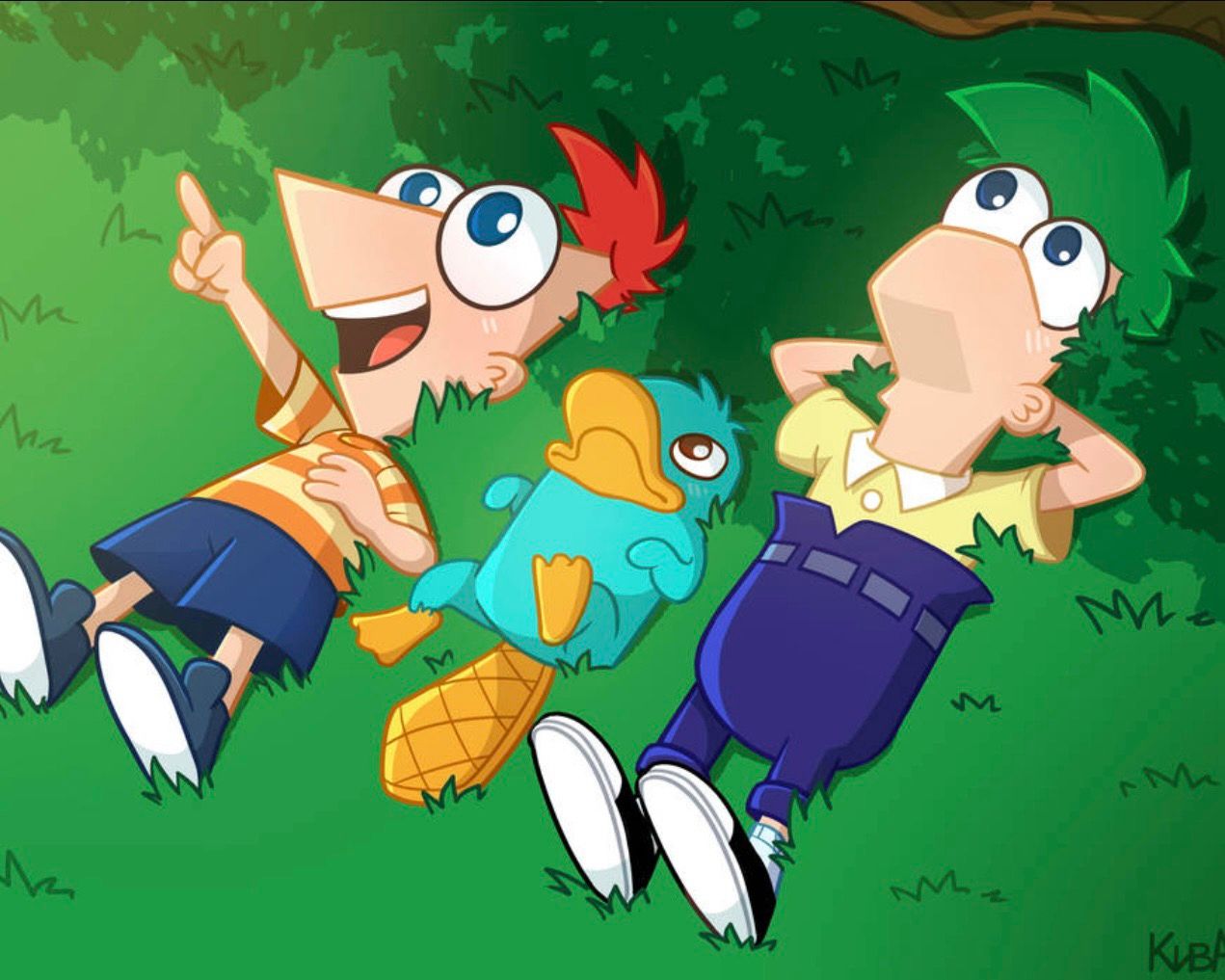
Was there a time when free time and summer were inherent practices of scholé, before internet culture and social media? The most obvious example I could think of regarding this nostalgic feeling is the children’s cartoon series Phineas and Ferb, which first aired in 2007. In this tv series, Disney’s longest running animated series, two stepbrothers embark on a grand, creative project every day of their 104-day summer vacation, building rollercoasters or time machines. They acquire skills in engineering, music, and physics, creating a space for learning and community, distinguished from work by its basis in free, creative inquiry.
Their title sequence reads:
‘There’s 104 days of summer vacation and school comes along just to end them, so the annual problem of our generation is finding a good way to spend them, like: building a rocket or fighting a mummy, or climbing up the eiffel tower, discovering something that doesn't exist [...]’
Following the intro, the brothers sit under a tree, bored and unsure what to do. I think it's precisely this boredom that distinguishes leisure and rest from work and initiates nostalgia. This boredom constitutes scholé. When Phineas and Ferb crave the feeling of riding a rollercoaster, they decide to build one themselves. Their mom leaves the house to do groceries giving them the potential to create something possibly dangerous without parental guidance. Their sister Candace, instead of joining in on the fun, tries to bust them and assert herself as an adult, troubling herself with business and inhabiting “aschole”, countering leisure.
Phineas and Ferb start building the rollercoaster, visiting different engineers' studios and borrowing their equipment. They fill out permits for machine equipment with crayon, and impress older engineers with their dedication. They invite all the kids from the neighborhood to come ride the roller coaster with them. All the while their pet: Perry the Platypus acts as a double agent and tries to bust their arch nemesis Dr Dufenshmirtz from tearing down the city. Perry succeeds but incidentally, using the magnet Dr Dufenshmirtz created to destroy, Perry takes the rollercoaster off its hinges, right as their Mom leaves the grocery store and Candace almost busts them. This results in the kids flying off the hinges of the rollercoaster and traveling from mount rushmore to Paris to space and when they finally fall from the sky at a rapid pace, they stay calm and land sitting under their tree where the episode started, right in time for their Mom to think they were chilling all day. And maybe they were?
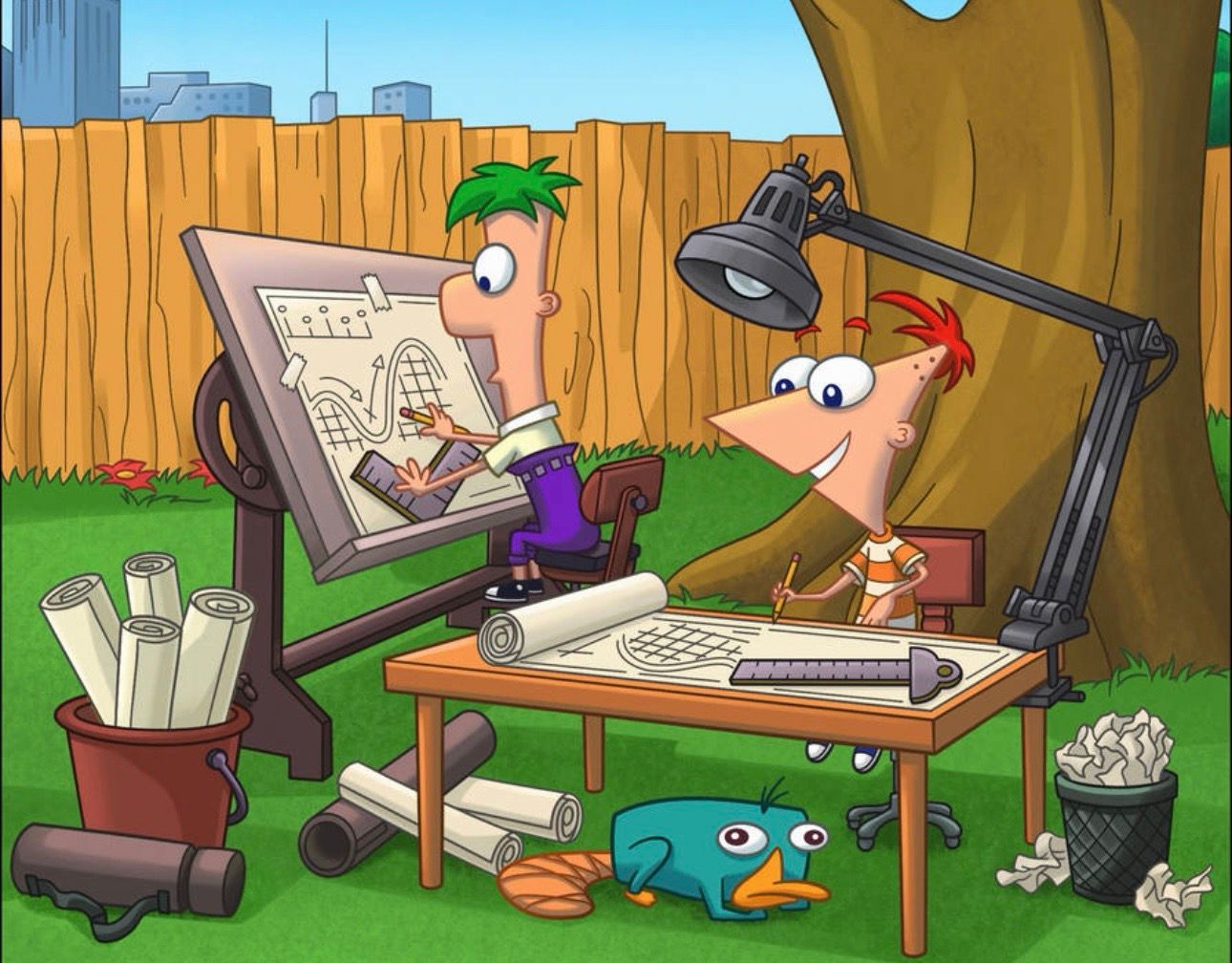
By the end of every episode Phineas and Ferb can be found under the same tree they started at. It makes you wonder, did all of that stuff actually happen, or were they imagining this storyline engaging in philosophical inquiry together under the tree? Nonetheless, it doesn't matter, their inventions always get destroyed by doctor Dufenshmirtz and their experiences were all kept secret from adults, and capitalist society at large. They accept the lack of recognition due to their passionate pursuit of knowledge and imagination. They achieve all of them through boredom and rest. This is why free time— separate from school, work, and screens is so important.
Both Socrates and Phineas and Ferb sat under trees, contemplating what to do with their time, their lives, and how to engage with the world around them. If we attribute the same level of importance of scholé to modern lifestyles as Socrates, Phineas, and Ferb do, then freedom from the capitalist systems that confine us to work is more than necessary. Thinking back to me nagging my cousins on those long summer days when we complained of having 'nothing to do.' We didn't know we were practicing scholé. We didn't know that not only were our favorite TV show characters Phineas and Ferb philosophers, but so were we. This makes me wonder: is that kind of boredom even possible anymore? Can we find our way back under the tree? Or have we all fallen too deep inside the rectangle?
1 Robert A. Stebbins, ‘Leisure’, Encyclopedia Britannica, laatst aangepast op 2 maart 2026, https://www.britannica.com/topic/leisure.
2 Kostas Kalimtzis, An Inquiry into the Philosophical Concept of Scholê: Leisure as a Political End (Londen: Bloomsbury Academic, 2017).
3 Len Maessen, ‘Hoe veilig is het je kind achter te laten in Roblox?’, 27 oktober 2025, NRC.